
Free Click & Collect
Within One Hour

Reading time: 4 minutes
Timber is a natural material though, so it will keep reacting to its surroundings. For this reason, it is important that you are always storing this material correctly so that it performs to a high quality once installed onto whatever structure you are working on.
Fail to set up adequate timber storage solutions around your business and you run the risk of any timber suffering the following issues before you even have the chance to use it for a job:
Rotting to occur, as the timber is allowed to stay damp for long periods or is stored in a way that the material receives insufficient levels of air circulation
Timber to warp from absorbing moisture unevenly or from being subjected to temperature fluctuations
The material to become damaged and permanently deformed due to it being stacked without enough support underneath
Timber to become dented or split from being placed around areas of a worksite where people can easily bump into the supplies
Staining or tannin bleed to take place when timber is left unprotected from chemicals, soil or non-stainless metals, leaving it with an unsightly appearance
The likes of ants, termites, wood beetles and other pests to easily access and damage your timber supplies
When you need to store timber for a length of time before it is used on a project, make sure a dry location that is well ventilated is chosen.
Your supplies must also be placed at least six inches off the ground, so that moisture cannot build up on the material. Stacking them on sleepers, pallets or blocks will all work.
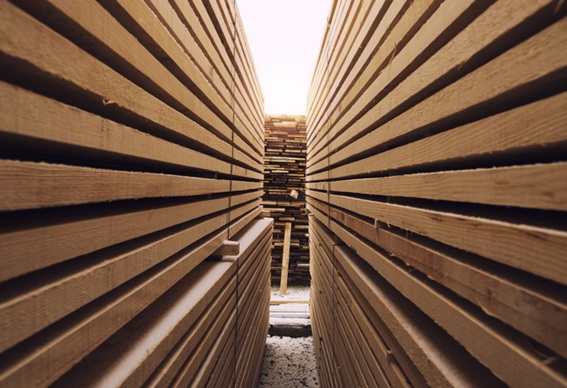
Have a pile of timber to place into storage? Only ever lie them horizontally – warping becomes an increased risk when timber is stored in an upright position because of uneven moisture spread and the effects of gravity – and in a way that each piece of material is flat.
Ensure you evenly distribute the weight across all your timber supplies too. A small support or level bearer placed between each board is advisable to help here, as they can create air gaps of around 25mm.
While garages and sheds are perfect places to store timber indoors, this material is perfectly fine to be put outside. Just remember to cover it using waterproof sheeting or tarpaulin, though in a manner that some air can get through to prevent damage from condensation becoming trapped.
Don’t forget that you will be required to regularly monitor timber when you are planning to store the material for a substantial period.
Make it a habit that you check your supplies for any of these issues at least once a month:
A musty smell, which can be evident of fungi being present
Discolouration
Fresh warping or twisting of the material
Small holes, which can indicate that insects and pests have gotten into the material
Soft spots which worsen when you push into these areas
Staining that is bluish grey in appearance
Pieces of timber with any of these issues present should be removed from the stack without delay. Finding these affected pieces quickly can reduce the risk of the problems spreading across your entire stock.
Rotating your entire supply of stored timber can prevent the material from warping or cracking too. This will only need to be carried out every two months, but the redistribution of weight prevents a board at the bottom of the stack from always bearing the heaviest weight.
Do you now find yourself confident on how to store timber effectively around your business, but unsure of the type of material you need for your upcoming projects? We have a guide that clearly sets out the different timber materials available, as well as expert advice on when to buy treated or untreated timber.