





Free Click & Collect
Within One Hour

Reading time: 4 minutes
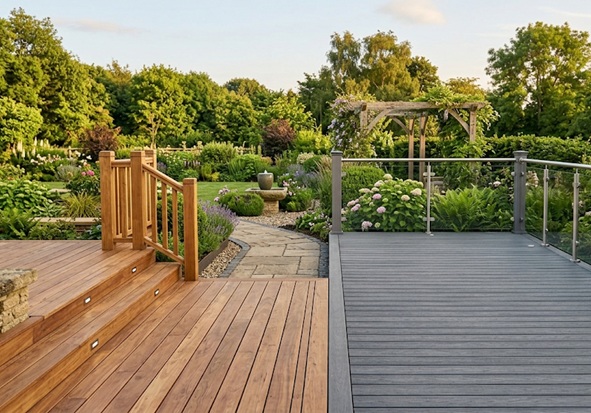
Composite decking refers to man-made wood plastic composite (WPC) boards, which are constructed from a mixture of recycled plastic and wood fibres. By mixing plastic with wood fibres, a durable wood decking aesthetic can be created.
Timber decking is a natural product though, where boards are made entirely from real wood and fixed to a supporting frame. Providing a natural appearance, the use of timber means that the decking can respond to moisture, temperature changes, and the weather once installed.
You may come across two types of composite decking when shopping for these materials:
1. Capped composite decking, which has a plastic shell bonded to the core.
2. Uncapped composite decking, which contains exposed wood fibres.
There are also two types of timber decking to choose from when buying these boards:
1. Hardwood decking, which is durable by being sourced from slow-growing trees.
2. Softwood decking, which comes from coniferous, evergreen trees and is then pressure treated to protect the timber.
Composite decking should be recommended to property owners who want a low-maintenance garden deck. This is because the material is designed to be resistant to moisture, rot, and damage caused by insects. Meanwhile, boards can easily be kept clean with a power wash.
These boards are also advisable when fitted in outdoor spaces which are often subjected to extreme weather conditions, due to their durable and low-slip designs.
A durable design will prove appealing in gardens with high footfall too, as composite decking does not warp or splinter.
Property owners will be able to select from various styles and colours if they select composite decking as well.
However, take note to advise property owners that composite decking is usually more expensive upfront than timber decking. These boards also retain heat and so will feel hot to walk on, so may not be the best solution on a garden deck that will be regularly exposed to hot weather and direct sunlight.
A deck will need to have a strong foundation when fitted with composite decking too, as these boards will be heavier than timber decking.
Property owners will find timber decking to be a more affordable way to enhance their outdoor space.
These boards catch the eye by offering the authentic look of natural timber as well, complete with unique grain patterns and characterful knots, swirls, and other textures.
Furthermore, sanding and treating the surface is all that is required to maintain timber decking when boards become scratched or damaged.
Just make sure to let property owners know that timber decking will require regular cleaning, staining, and other upkeep methods to keep the boards looking their best.
Compared to composite decking, timber decking is also more likely to suffer from weathering – this can include boards splitting, cracking, and fading over time.
Whether an upcoming job will involve you working with timber or composite decking boards, make sure you read through our planning your garden decking guide next for expert advice on getting started with these projects.