





Free Click & Collect
Within One Hour

Reading time: 6 minutes
Composite fencing can be a practical option for boundary, landscaping and external works projects where a neat finish and reduced maintenance are important. For contractors, choosing the right system means looking at more than the colour or panel style. Posts, gravel boards, fixings, ground levels and installation requirements all need to be considered before materials are ordered.
Composite fencing is made using a mixture of recycled high-density polyethylene (HDPE) plastics and wood fibres. It's often designed to give the appearance of timber, but with lower maintenance needed. It is commonly used for garden boundaries, landscaped areas, property improvements projects and external spaces where a clean, consistent fence line is needed.
Unlike traditional timber fencing, composite fencing panels do not usually need regular painting, staining or treatment. This can make them useful for projects where the finished fence needs to be easy to look after over long periods of time.
Composite fencing should still be specified carefully. The fence needs suitable posts, fixings and support to make sure it performs well in the conditions it is installed in.
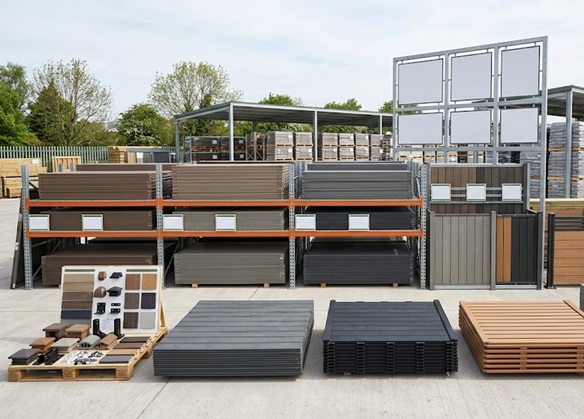
Composite fencing can be supplied as full composite fence panels or as individual composite fence boards. Both can work well, but they suit slightly different projects.
Composite fence panels are usually supplied as complete sections. They can be useful where the project needs a consistent finish across standard fence bays. This can make them a practical option for straight runs, boundary fencing and repeated installations.
Composite fence boards are fitted individually as part of a fencing system. They may give contractors more flexibility when adjusting the height, replacing sections or working with a specific layout.
Before ordering, check the panel or board dimensions, post compatibility and fixing method. Some systems are designed to work together, so mixing different components may affect the final finish or stability.
Composite fencing may be suitable where the project needs a smart, consistent boundary with less ongoing maintenance than timber fencing. It can work well for property boundaries, communal outdoor areas, landscaped spaces and commercial external works.
Composite fencing may be a good choice where:
A consistent finish is required
Lower maintenance is a priority
The fence needs to suit surrounding landscaping
A timber-effect appearance is preferred
The project includes longer or repeat fence runs
A clean modern finish is needed
For trade projects, it is worth thinking about the level of exposure, ground conditions and how the area will be used before choosing a fencing type.
Before ordering composite fence panels or composite fence boards, you should check the full fence specification. This helps make sure the materials are suitable for the site and can be installed correctly.
Key points to check include:
Total length of the fence
Required height of the fence
Ground levels and changes in direction
Type of post and spacing needed
Fixing requirements
Gate positions and access points
Compatibility with gravel boards
The colour and finish
Delivery access and storage on site
Composite fencing systems may have specific installation requirements, so you should check the product guidance before work begins.
The supporting components are just as important as the fence panels or boards. Fence posts provide the main structure, so they need to suit the chosen composite fencing system.
Some composite fencing panels are designed for use with specific posts or slotted systems. Others may need brackets, rails or specialist fixings. Using the wrong components can affect alignment, strength and appearance.
Gravel boards can help create a neat base line and keep the lower part of the fence away from direct ground contact. This can be useful where ground levels vary or where soil may sit against the bottom of the fence.
External-grade fixings should be used where required, and contractors should avoid mixing systems unless the manufacturer confirms they are compatible.
Good preparation helps create a better finished result. Before installation starts, measure the fence line and check for level changes, corners, boundaries and access points.
The ground should be cleared where posts need to be installed. Any old fencing, roots, vegetation or debris should be removed and disposed of in the correct way.
Where the fence line includes slopes or uneven ground, decide whether the fence will be stepped or adjusted to follow the ground level. This should be planned before posts are set, as it can affect post height, board layout and the final appearance.
Materials should also be stored safely on site. Panels and boards should be kept supported and protected from damage before installation.
<h2>How to install composite fencing
The exact installation method will depend on the product being used, so always follow the manufacturer’s guidance. Most composite fencing projects follow a similar process.
Use a string line to mark the fence position. Check boundaries, corners, access points and ground levels before installing posts.
Set the posts at the correct spacing for the composite fence panels or boards. Posts should be upright, aligned and secured in line with the product guidance.
If the system includes gravel boards, base rails or starter sections, fit these before adding the panels or boards. This helps create a consistent base line.
Fit the composite fence panels or boards according to the manufacturer’s instructions. Check levels and alignment as work progresses to keep the fence line consistent.
Caps, trims or capping rails may be used to complete the fence. These can improve the finished appearance and help protect exposed edges where required.
If the project also includes composite decking, read our installation guide for composite decking.
Composite fencing is generally lower maintenance than timber fencing, but it should still be checked and cleaned as part of routine upkeep.
Dirt, leaves and surface marks can usually be removed with suitable cleaning methods. Check manufacturer guidance before using cleaning products, pressure washers or abrasive tools.
Regular checks can include:
Inspecting posts and fixings
Cleaning surface dirt
Checking for movement after bad weather
Removing soil or debris from the base
Checking gates and access points
Replacing damaged sections where needed
Although composite fencing does not usually need the same staining or treatment as timber, it still benefits from being kept clean and properly supported.
Composite fencing can provide a neat, durable finish when installed correctly. Common mistakes can affect the appearance or performance of the finished fence.
Mistakes to avoid include:
Ordering panels without checking post compatibility
Not allowing for changes in ground level
Using unsuitable fixings
Ignoring manufacturer installation guidance
Setting posts at the wrong spacing
Not checking colour or finish before installation
Failing to plan gate positions
Storing panels or boards incorrectly on site
Mixing systems that are not designed to work together
Taking time to check the specification before work begins can help reduce delays and rework.
Composite fencing is usually made from a mixture of recycled high-density polyethylene (HDPE) plastics and wood fibres. The exact composition can vary depending on the product, so contractors should check the manufacturer’s specification before ordering.
Yes, composite fence panels are generally lower maintenance than timber fencing because they do not usually need regular painting, staining or treating. They should still be cleaned and checked as part of routine maintenance.
Yes, composite garden fencing can be used for boundary fencing, landscaped areas and property improvement projects where a clean and contemporary finish is needed.
The best option depends on the project. Composite fence boards may offer lower maintenance and a more consistent finish, while timber boards may be preferred for a traditional appearance.
Some composite fence panels are designed to work with specific posts or fixing systems. Always check compatibility before ordering.
Composite fencing can be a useful option for projects where appearance, consistency and lower maintenance are important. Composite fence panels may suit standard fence runs, while composite fence boards can offer more flexibility depending on the system.
Before ordering, check the fence length, height, post compatibility, fixings, ground levels and installation guidance. As a builder’s merchant, Travis Perkins offers a range of fencing materials, posts, fixings and landscaping products to support all of your fencing projects.