





Free Click & Collect
Within One Hour

Reading time: 6 minutes | Published 5 November 2026
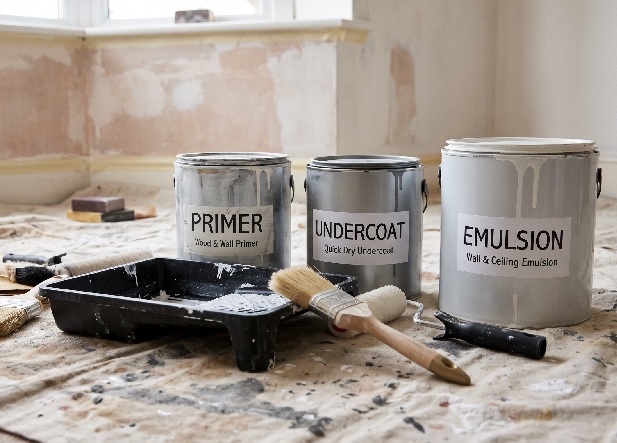
Primer seals a surface and can improve adhesion before the final finish is applied. Different primers suit different materials, with products formulated for bare timber, metal and plaster alongside specialist primers for problem areas.
A product intended for bare timber will not necessarily suit metal or a plastered surface, so the primer should match both the material and the coating that follows. Stain-blocking primers, for example, are designed to prevent marks from bleeding through later coats.
A surface that's already painted and in sound condition, with no staining or bare patches, often doesn't need a separate primer.
Primer deals with the surface itself, preparing bare or problem surfaces so later coats can adhere properly.
An undercoat sits between a prepared or primed surface and the finishing coat where the specified paint system calls for it. It improves opacity and creates a consistent base where a strong colour change, repairs or previous coatings have left the surface uneven in colour or porosity. In timber and metal surfaces, it’s commonly used before a finishing coat such as gloss, rather than as a general preparation coat for every surface.
The two jobs sometimes get combined into a single product. Some dual-purpose primer undercoat products can prime bare surfaces and provide an undercoat on previously painted surfaces, depending on their stated use. A job therefore doesn't always need two separate products.
Not every undercoat is suitable as a primer on bare or problem surfaces, so check the specific product before relying on it for both tasks.
Emulsion is a water-based paint generally used as the finishing coat on internal walls and ceilings. It comes in various finishes including matt and silk, with the preparation underneath depending on the surface and its condition.
The finish also affects where the emulsion is suitable. Matt, durable matt and silk finishes have different levels of sheen, washability and resistance to wear, so the choice should reflect how the space will be used as well as the required appearance.
New or bare plaster may require a mist coat or another suitable first-coat treatment, depending on the chosen paint. Check the manufacturer's guidance before applying the finishing coats.
For guidance on choosing between matt, silk and other finishes, our interior paint buying guide covers finish selection in more detail.
Not every job needs both products, and the right approach depends on the surface and the paint system being used:
Bare or uncoated surfaces – may need a suitable primer before further coats, depending on the material and chosen paint finish.
Problem surfaces or staining – may call for a specialist primer to seal or block marks before finishing coats are applied.
Previously painted surfaces – may not need a separate primer if the existing coating is suitable and properly prepared.
Paint systems specifying an undercoat – commonly used in suitable timber and metal systems before finishes such as gloss.
Combined primer undercoat products – can cover both stages on suitable surfaces, but check the manufacturer's guidelines before relying on one product for both.
Always check the manufacturer's instructions for the specific product being used, since coverage, dry times and suitable surfaces vary.
You can find undercoats and primers and emulsion paints for different surfaces and paint systems here at Travis Perkins.